Updated October 2025
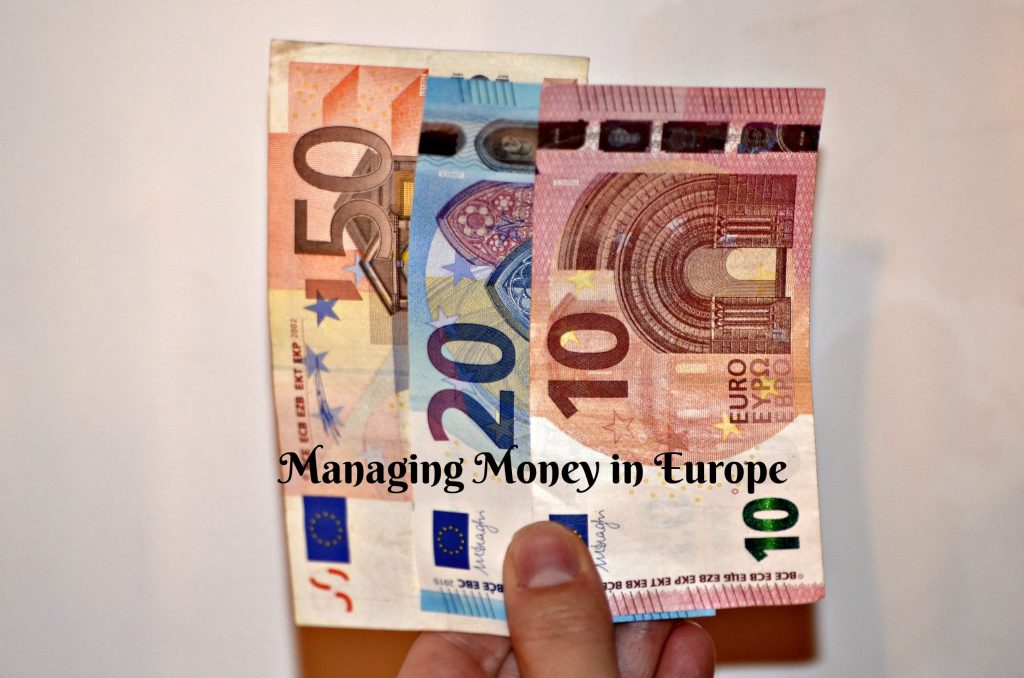
Are you planning a trip abroad and want to know how to manage money in Europe without wasting your hard-earned cash on hidden fees or bad exchange rates? After living in France and traveling across Europe for four years, I can safely say we’ve learned a few lessons — and made some costly mistakes. I’ve gathered all our best Europe travel money tips in one place to help you avoid the same blunders.
Let’s dive in to discover the best travel debit cards for Europe, how to avoid ATM fees, understand the local currency in each country, and even what ATMs are called throughout Europe.
How to Manage Money in Europe:
Knowing the Local Currency in Europe
Before your trip, it’s important to know what type of money you’ll be using in each country. Luckily, more than half of Europe uses the euro (€) — which makes traveling between many popular destinations much easier. No need to constantly exchange money or worry about confusing conversion rates! I’ve heard stories from my parents traveling Europe many years ago and needing a different currency in every single country. What a hassle!
That said, not every European country uses the euro. Some still rely on their own local currency, so it’s smart to double-check before you go. Using the right currency will help you get the best exchange rate and avoid paying more than necessary at shops or restaurants.
Countries That Don’t Use the Euro
Here’s a list of European countries that don’t use the euro and the currency they use instead:
- Albania (Albanian lek)*
- Azerbaijan (Azerbaijani manat)
- Belarus (Belarusian ruble)
- Bulgaria (Bulgarian lev)
- Croatia (Croatian kuna)
- Czech Republic (Czech koruna)
- Denmark (Danish krone)**
- Georgia (Georgian lari)
- Hungary (Hungarian forint)
- Iceland (Icelandic krona)
- Liechtenstein (Swiss franc)
- Macedonia (Second Macedonian denar)
- Moldova (Moldovan leu)
- Norway (Norwegian krone)**
- Poland (Polish złoty)
- Romania (Fourth Romanian leu)
- Russia (Russian ruble)
- Serbia (Serbian dinar)
- Sweden (Swedish krona)
- Switzerland (Swiss franc)
- Turkey (Turkish lira)***
- Ukraine (Ukrainian hryvnia)
- United Kingdom (Pound sterling)
*Some touristic places in Albania also accept Euros, Pounds and American Dollars.
** Some tourist places in Denmark and Norway also accept Euros, but exchange rates are often poor.
*** We used Euros in Ephesus, Turkey but I don’t think the exchange rate was the greatest.
Hungary, Poland, Sweden and Czech Republic may accept Euros as well but I don’t recommend it.
Generally, you should use the local currency even if they do accept Euro’s. If a shop or restaurant accepts euros in a non-euro country, the exchange rate is rarely in your favor. Always pay in the local currency to avoid overpaying.
Derrick still talks about the time I tried to use Euro’s in Switzerland and couldn’t figure out why the parking meter wouldn’t work 🙂 Thankfully a nearby café helped me exchange my cash. Turns out I wasn’t the only tourist to walk through their door with the exact same issue. Not my finest travel moment.
Using ATMs in Europe (and How to Avoid Fees)
One of the best ways to get local currency is through ATMs in Europe. I always skip the currency exchange offices — their fees and rates are rarely competitive.
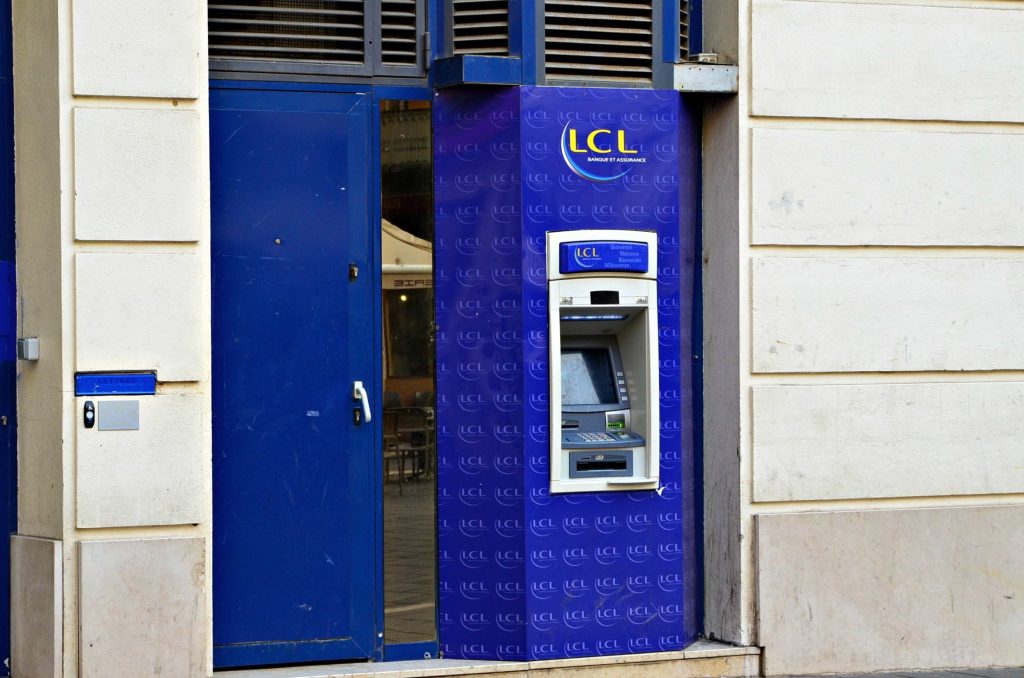
Many European ATMs don’t charge a fee to withdraw cash. The fee usually comes from your own bank, not the ATM itself. Still, avoid small corner-store or convenience-shop ATMs; they often add sneaky surcharges. Look for ATMs attached to major banks — they’re safer and more reliable. I’ve had my bank card number stolen abroad and it was a struggle to get it cleared up & a new card shipped while out of the country.
Tips for Using ATMs in Europe
- Choose ATMs at reputable banks (Deutsche Bank, BNP Paribas, Santander).
- If an ATM displays a fee before your withdrawal, cancel and try another one nearby.
- Withdraw larger amounts at once to minimize per-transaction fees.
- If you’re in Barcelona, watch out — many machines charge a flat €5 fee per withdrawal.
A good rule of thumb: choose to withdraw in local currency, never in USD.
Before heading out in the city, you can stop by the ATM at the airport upon arrival, to grab a bit of cash. This will hold you over and allow you to pay for a cab or get a bus ticket to your destination.
The Best Credit & Debit Cards for Traveling in Europe
US banks & credit card companies are famous for ATM and currency conversion fees. My everyday bank charges $1 per transaction for not using an in-network ATM plus a 1% conversion fee. I paid this for months before I got smart. All that wasted money! Additionally, many standard credit cards charge up to a 3% foreign transaction fee. That adds up quickly, so stick with cards offering 0% foreign transaction fees.
Credit cards are your friend — as long as you have the right cards and use them wisely! I charge most purchases to my travel credit cards to earn points and get trip protection, but we always pay off the balance monthly. Earning points isn’t beneficial if I’m paying interest.
I use either my Visa or MasterCard. The exchange rate from Euro to USD are pretty similar with both brands. Although I’ve noticed that with other currencies, MasterCard can have a slightly better conversion rate. AMEX isn’t accepted at most retailers such as grocery stores, shops and restaurants. You should be okay at hotels and airlines. And I can’t remember seeing anywhere accepting the Discover card.
When traveling in Europe, make sure your cards:
- Have a chip (most do now)
- Offer 0% foreign transaction fees
- Support chip-and-PIN for unmanned kiosks, toll booths, and gas stations

My Favorite Travel Cards for Europe
Charles Schwab Bank Debit Card
- No ATM withdrawal fees
- Unlimited ATM fee rebates worldwide (rebates occur at the end of each month)
- No foreign transaction fees
Capital One 360 Checking Debit Card
- No ATM or foreign transaction fees
- Great backup card if your main one is lost or compromised
Chase Sapphire Preferred (Visa)
- 0% foreign transaction fees
- Earn 2X points on dining and travel
- Generous welcome bonus
Chase Sapphire Reserve (Visa)
- 0% foreign transaction fees
- 3X points on dining and travel
- Includes $300 annual travel credit and lounge access plus other perks for the hefty annual fee
Capital One Venture (Mastercard)
- 0% foreign transaction fees
- Excellent for earning travel rewards
Charles Schwab debit is now my go to account when traveling abroad and the Capital One debit card is taken as a backup. We also have both the Chase Sapphire cards mentioned above plus the Capital One Venture and Venture X for the various benefits and point earning potential. Additionally, we carry multiple credit & debit cards while traveling. Derrick & I carry different cards, so if someones wallet is stolen or our card is compromised, we aren’t stuck. We also split our cash for the same reason.
Plan on withdrawing money from your checking account. You don’t get the savings or checking option in Europe and you can’t make a transfer at the ATM. You should be able to go online and move money from one account to another, in a pinch- provided you have secure wireless connectivity.
Dynamic Currency Conversion: Always Pay in Local Currency
When paying with your credit card or withdrawing cash from an ATM, you’ll often be asked whether you want to pay in your home currency (USD) or local currency. Always choose local currency.
That “courtesy” of showing prices in USD is called Dynamic Currency Conversion (DCC) — and it’s a rip-off. DCC adds an extra 5–10% markup to the exchange rate. Even if your card charges a small foreign transaction fee, you’ll still save more by paying in the local currency.
If you’re unsure what the local rate is, use the XE Currency app. It works offline and keeps you updated on current exchange rates.
You might also like to see more of our favorite Travel Apps for Europe before your trip.
Managing Cash While Traveling
Cash still matters in Europe — especially for tips, small cafés, open-air markets, taxis and even restrooms. Many places have minimum credit card charges as well (often €10–15).
Smart Cash Tips
- Withdraw from ATMs once you arrive — don’t bring large sums of USD or exchange at home.
- Spend leftover cash before leaving each country.
- Use coins for small purchases — you can’t exchange them back home.
- Some hotels or apartments may offer discounts for paying in cash since they avoid credit card processing fees.
If you’re nearing the end your trip and have extra euros or pounds, keep them for your next visit or buy snacks and souvenirs before heading to the airport.
Note – You could order money from a local bank before traveling. Call around to get the best rate and remember that is can take time to get the money shipped – plus a possible shipping fee. If you are renting an apartment and have a high cash deposit, you may want to go this route depending on the amount of money you can withdraw in 24 hours. I usually avoid rentals with high cash deposits, but this is an option. Again, I recommend waiting to get your money at the local ATM to get the best exchange rate. You’ll find plenty of ATM machines in European airports even if the first one you find is broken.
Notify Your Bank & Secure Your Cards
Before traveling, set up travel notices on your bank and credit card accounts. Some institutions don’t require it anymore, but it’s worth checking to avoid getting your card frozen abroad.
Also, confirm your daily withdrawal limit. Many US banks cap ATM withdrawals at around $300/day, which might not equal much once converted to euros or pounds for example.
To protect yourself from fraud, consider an RFID-blocking wallet to prevent digital pickpocketing. If you’re crafty, even aluminum foil inside your wallet works in a pinch! It’s rare but can happen — one of my friends had her card scanned at a theme park.
Know the lingo, an ATM in Europe is Known as…
- France = (DAB) distributeur automatique de billets or just distributor
- UK = cash machines
- Germany = Geldautomat
- Italy and many other countries = bancomat
You might also like What to Pack for Europe – 6 thing you’ll wish you packed for your trip.
FAQ: Common Questions About Money in Europe
Should I exchange money before my trip?
No — ATMs in Europe offer better rates than currency exchange booths or US banks.
Can I use my American debit card in Europe?
Yes, as long as it has a chip and you know your PIN. Just make sure your bank supports international withdrawals.
How do I avoid ATM fees in Europe?
Use bank-owned ATMs, withdraw larger amounts less often, and pick a card that refunds ATM fees (like Charles Schwab).
Is cash still necessary in Europe?
Yes — especially for tips, local markets, small purchases, and rural areas.
Whether it’s your first or tenth trip to Europe, managing money smartly can save you hundreds in fees and frustration. Always pay in local currency, choose travel-friendly cards, and avoid airport exchange booths. If you’re going to spend money, make sure it’s on amazing food, memorable experiences and souvenirs — not unnecessary bank charges!
What are out tips to manage money in Europe? Do you have any money blunders of your own?
Pinterest Photo Credit: FreeImages.com/Timothy Smith
This is a great article, so helpful! What one can also do is save up on ATM and bank fees with apps like ATM Fee Saver – it gives a list of atms in many countries that do not charge any fees to foreign card holders or have much lower fees than others along with withdrawal limits. quite a life saviour. worth adding to your list of tricks! And also a get fee free card while travelling.
I’m traveling to London, from Seattle, in March 2020. According to my bank (Wells Fargo) I can get British pounds free of charge if they have the currency available at a branch. This might be an option at your American bank branch as well so I’d ask them.
Hi Dana, Thank you for the article!
I generally avoid ATM because of the fees and the unfavourable rate at the exchange offices. To change cash, there is a new mobile application Fairswap.
Broadly, we can exchange & convert cash currency in real-time by meeting with each other at a pre-agreed location.
Could be a good way to find some foreign currency before travelling or get rid of some leftover after holidays.
Thanks, I hadn’t heard of this app. Though I couldn’t find a lot of reviews on it. With a card that doesn’t charge a fee for out of network ATM withdraws, I find it to be a great option.
Hi Dana – Great article, thank you. Do you have a list or map of DB DAB locations in Paris? I am having trouble finding anything of the sort.
Hm, all I could find was this link: https://www.db.com/france/
But you shouldn’t need to worry about ATM fees in Paris. Other than what your bank may charge. Unless you’re using the little in-store machines.