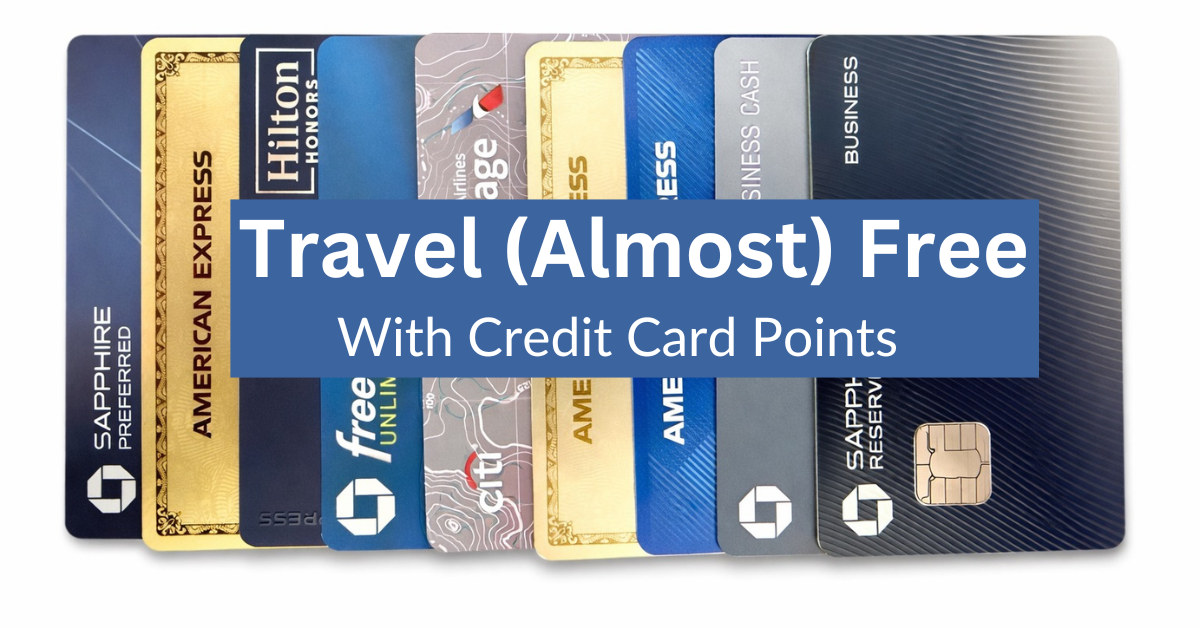
If you’ve never used points and miles, this guide is for you. I’ll walk you through the why, what and exactly how to start – without spreadsheets taking over your life or swiping your way into debt. You’ll see how I string together sign-up bonuses (SUB), transfer partners and perks (like airport lounges) to turn normal spending into cheap or free trips.
A few personal trips using points – Family trip to Asia in business class, only paying taxes on flights to FL and getting a free night hotel stay before ALL our cruises, NOLA mostly on points, plus booked my family to Ecuador in economy down and business class back plus several hotels – all on points!
Why Points Work – Travel Hacking for Beginner’s
Why this isn’t exactly couponing in disguise – from a former Extreme Couponer:
Points are a currency! Banks reward you with points or miles for opening a card and using it. Those points can be cashed out for things like gift cards or used to “erase” purchases, but the real value is transferring to partners redeeming for flights and hotels, where you can get 2-10¢ per point (sometimes more).
Sign-up bonuses are more valuable than everyday swipes. A single welcome bonus can cover a round-trip to Europe or a week of hotels. You don’t need a dozen cards to start – just one good card plus a plan.
Flexibility beats loyalty. I prefer flexible currency (Chase Ultimate Rewards (UR), AMEX Membership Rewards (MR), Capital One Miles, Citi ThankYou Points) because I can transfer them to different airlines and hotels when I find deals. I won’t lie, it takes time and patience but the payoff is worth it!
The Three Types of Travel Rewards:
1. Bank Points (Flexible Rewards)
These are the most valuable because you can transfer them to multiple airlines and hotels.
Examples: Chase Ultimate Rewards, Amex Membership Rewards, Capital One Miles, Citi ThankYou Points
2. Airline Miles
Earned through co-branded airline cards or point transfers.
Examples: United MileagePlus, Delta SkyMiles, American AAdvantage
3. Hotel Points
Ideal for free nights and upgrades.
Examples: Marriott Bonvoy, Hilton Honors, World of Hyatt
Tip: Start with a flexible points card (like Chase, Amex, or Capital One). They give you the most options.
The Secret Sauce: Sign-Up Bonuses
Sign-up bonuses are how you earn fast. Instead of taking a year to earn 60,000 points, you can get them in three months.
You’ll often see offers like:
“Earn 60,000 points after spending $4,000 in the first 3 months.”
That one move can cover an international flight or a week-long hotel stay. This is what those of us serious about this “game” focus on.
The Quick Map
- Pick one beginner card (examples below).
- Hit the minimum spend in the timeframe required with expenses you already have.
- Learn one or two transfer partners from that bank (don’t try to learn them all).
- Book a real trip within 6 months (momentum matters).
- Layer in card #2 such a business card when you’re comfortable.
- Rinse and repeat BUT pay in full every month and track your points.
See current beginner-friendly cards
Step-by-Step: Your First 90 Days
Day 0: Choose your path
Pick a flexible points card that matches how you spend:
- Chase Sapphire Preferred – balanced option, strong partners (such as United, Air Canada Aeroplan, British Airways/Avios & Hyatt) with great travel protections. I highly recommend starting with this card due to the 5/24 rule (more details below). The annual fee is just $95 & allows transfers to partners with Hyatt being a favorite due to it’s extremely well priced redemptions.
See current offers → Check out current offers and sign-up with my referral link - Amex Gold – everyday earner (dining & groceries stack up fast). Transfer to Delta, Air France/KLM, Virgin Atlantic, ANA, etc. This is a fantastic “keeper” card but remember it takes up a 5/24 spot. AMEX has a family rule for the Green, Gold and Platinum cards. You need to start from the bottom and work your way up to avoid missing out on SUB’s. Due to the AMEX Green cards annual fee and low SUB, it’s usually advised to skip it (as to not add to your Chase 5/24). Start with the Gold then move to the Platinum.
- Capital One Venture – simple earn & burn at 2x everyday spend, easy redemptions & solid transfer partners. Capital One is inquiry sensitive so should be high on your list of cards to get, but I still suggest the CSP first. Capital One has recently introduced a 48-month restriction on earning welcome bonuses across the personal Venture, VentureOne and Venture X cards, preventing you from moving down the card fee ladder. Therefore, I suggest starting with the Venture then adding in the Venture X after 48 months. You don’t want to lock yourself out of a SUB!
See current offers → Check out current offers and sign-up with my referral link - Citi Premier/Strata Premier – strong earning and useful partners; simple annual fee card. You can now transfer to American Airlines! I do highly recommend this card, but it’s further down my list of must get cards due to the Chase 5/25 rule.
If you think you’ll open Chase Ink business cards soon (more below), start with Chase as their “5/24 rule” limits approvals if you’ve opened 5+ cards (from any bank, excluding business cards) in 24 months.
Ideally, start with the CSP, move to INK’s then move onto other bank currencies remembering that Capital One is inquiry sensitive.
Weeks 1–4: Hit the minimum spend (without spending more)
- Route normal expenses through the new card: groceries, gas, utilities, streaming, insurance, cell phone, internet and general everyday shopping.
- Time a big expense (car maintenance, annual insurance, home projects, etc).
- Consider PayPal or bill-pay services for rent or taxes if fees make sense during a bonus window. There is usually a fee for bill pay services, so I only consider this option if I can’t hit the SUB.
- If you share finances, have a partner add you as an authorized user on the new card to consolidate spend (note: being AU can count toward 5/24 at times). I do 99% of our household shopping/spending, so I keep all new cards in my wallet to hit the spend.
Tip – Add to Apple or Samsung Wallet for your partner to spend on the card without needing the physical card.
Weeks 5-8: Learn two “sweet spots”
Don’t memorize charts. Pick two wins and aim your points there:
- Hyatt (via Chase): 12k–20k pts can book $300–$600+ rooms.
- Avios (via Chase/Amex/Citi/Cap1): cheap short-haul flights or partners like AA/Alaska/BA/IB.
- Aeroplan (via Chase/Amex/Cap1/Citi): huge partner web, great for mixed itineraries.
- Virgin Atlantic (via Amex/Chase/Citi/Cap1): occasional sweet spots to Europe and ANA (availability varies). Just be mindful of taxes & fees! They are crazy high!
See a points transfer partner cheat HERE.
Weeks 9-12: Book something
- Search the bank travel portal and check transfer partners for the same route/hotel; pick whichever gives better value.
- Be flexible with dates and gateways; shifting a day or 3 can cut award prices in half. It’s often beneficial to reposition to other airports to find better redemptions especially when booking first or business class or booking for multiple people. I repositioned from ORF to BOS to fly my family of 4 to Hong Kong in business class. It was impossible flying from my home airport.
- Don’t hoard points forever. Programs devalue. Book, travel, repeat.
How to Redeem (without headaches)
- Portal redemption: Use bank portals to pay with points like cash (easy, not always max value). Using portals for flight redemptions can be risky as you’re dealing with a 3rd party and must go through them (such as Chase) for changes. Hotels offer less risk, but 3rd party booking may be first to get booted if a hotel oversells.
- Transfer partners: Move points usually but not always 1:1 (or with promos) to an airline/hotel, then book with that program. Excellent value & just takes a few more clicks to link loyalty accounts.
- Cash + Points: Many airlines/hotels let you stretch balances by mixing both.
Rule of thumb: If you’re getting ~1.5¢+ per point on a flight/hotel, you’re doing good. If not, keep looking or use cash and save points for a bigger win. Everyone wants those grand redemptions and they are definitely fabulous, but you may not find such amazing deals when you’re first learning. Enjoy the trip and keep practicing for even better point redemptions in the future.
Perks That Save Real Money (and stress)
Airport Lounge Access – What’s the big deal?
Lounges mean free food & drinks, Wi-Fi, calmer space and often showers or family rooms. My Mother just had her first lounge experience and was blown away. Access varies by card:
- Amex Platinum → Centurion Lounges, Delta Sky Clubs (when flying Delta), plus Priority Pass (non-restaurant).
- Capital One Venture X → Capital One Lounges (growing network) + Priority Pass + Plaza Premium.
- Chase Sapphire Reserve → Priority Pass (check current restaurant policy) and access to Chase Sapphire Lounges where available.
Tips:
- Download the Priority Pass app to see lounges, hours, and guest rules.
- Build in extra time on long connections as lounges make layovers painless.
Built-in Travel Insurance & Protections (why I keep at least one premium card)
- Trip delay/cancellation/interruption coverage
- Primary rental car CDW (Sapphire Preferred/Reserve are standouts)
- Lost/delayed baggage reimbursement
- Purchase protection / extended warrant
These benefits can save hundreds when things go sideways which is exactly when you’ll be glad you used the right card for the booking. I do recommend Travel Insurance especially when considering medical coverage, but the insurance and protections from cards is a nice bonus. I used the coverage from the CSR when Lucy broke her wrist in the UK and required surgery.
The Cards I Suggest for Beginners
- Chase Sapphire Preferred – BEST starter for the Chase ecosystem; solid earn on travel/dining; strong protections; transfers to United, Southwest, Aeroplan, Avios & Hyatt.
- Chase Sapphire Reserve – alternative to CSP with premium perks, higher portal value, lounge access, robust insurance.
- Amex Platinum – lounge king (Centurion + partners), annual credits (airline/incidental, digital, hotel status). Best paired with another Amex for everyday earn.
- Amex Gold – 4x dining & groceries stacks points fast; great companion to Platinum.
- Capital One Venture X – “set-it-and-forget-it” premium value: easy earn, strong lounge trio (Cap One + Priority Pass + Plaza Premium).
- Capital One Venture – simple 2x everywhere with partner transfers when you’re ready.
- Citi Premier/Strata Premier – broad 3x categories; good transfer web; pairs nicely with a no-fee Citi card for pooling.
Chase Ink Business Cards (Beginner-Friendly Business Boost)
You don’t need a big company to get “business” cards. A sole proprietorship counts if you have any side income – tutoring, freelancing, rideshare, Etsy, photography, lawn care, Facebook Marketplace reselling, you name it!
Why Chase Ink?
- Huge sign-up bonuses.
- Useful categories for side hustles: shipping, advertising, internet/phone, office supplies.
- Points combine with your Sapphire for premium redemptions and transfers.
The Ink trio:
- Ink Business Cash – strong multipliers at office supply stores and internet/cell/cable. I like to get gift cards at the Office Supply store for places like Amazon to earn 5x.
- Ink Business Unlimited – simple, flat-rate earn on everything.
- Ink Business Preferred – higher travel protections, cell phone protection and transfers if you don’t hold a Sapphire. This one has a $95 annual fee.
See current Ink offers here with my referral link.
Don’t get the INK Premier – that’s cash back only.
“Do I qualify?” The basic checklist
- You make (or intend to make) money from a side activity (even $1 counts – intent to profit matters).
- You can apply as sole proprietor using your name as business name. EIN optional and SSN works.
- Keep simple records: a spreadsheet of sales/expenses, screenshots of listings, 1099s if applicable.
- Consider a separate checking account for your business activity to keep clean books.
- Log profits monthly and save a % for taxes.
- After a few months of consistent activity, you’ll have a clean history for bank applications and a steady stream of business spend to earn bonuses.
Best Cards Roadmap
- Open one flexible points card (e.g., Sapphire Preferred / Venture / Amex Gold). I highly recommend starting with the Chase Sapphire Preferred.
- Add a business card (Ink Cash/Unlimited)
- Move your way through the 3 INK ecosystem (Again, you don’t want the Premier as it only earns cash back.)
- Consider a premium lounge/insurance card if you value those perks (Platinum / Venture X / Sapphire Reserve).
- Add in the Capital One Venture since they are inquiry sensitive.
- Move onto other flexible currencies.
Don’t forget about starting this plan with a partner in the same household to reduce velocity and earn those points.
Earning More Without Spending More
- Use the right card in the right category. Groceries on Amex Gold, travel/dining on Sapphire, “everything else” on a flat-rate card such as a Venture.
- Stack portals & offers. Shop through bank shopping portals or airline portals when buying online; clip targeted offers in your card app.
- Transfer bonuses. Occasionally you’ll see +10-40% when moving points to a specific partner. If you have a near-term use, that’s a free top-up. Do NOT speculatively transfer because you MAY travel with that airline or hotel. You never know if points with devalue or what airline you will find the best points deal when the time comes to actually book.
- Household pooling. Some programs allow sharing/combining points within a household such as combining UR’s. Read the rules, then optimize.
Booking Tactics That Actually Work
- Start with the destination, not the airline. Search award space broadly (multiple carriers/programs).
- Be date-flexible by 1-3 days; shoulder days can be dramatically cheaper.
- Break the trip into segments. If you can’t find a full award, look for a positioning flight to a bigger hub. Such as JFK, LAX or IAD but don’t limit yourself to obvious hubs.
- Book one-ways as you can adjust the flight if points drop (carrier depending). You may also find a better flight/rate with one airline for the departure and another for the return.
- Pay cash when it’s cheap. Save points for outsized redemptions; not every flight should be an award.
Hotels: why I lean Hyatt
- Hyatt: often the best cents-per-point value; many aspirational properties at incredible award prices.
- Marriott Bonvoy: huge footprint; great for families and road trips.
- Hilton Honors: easy to earn, frequent promos; elite benefits can be generous.
Tip: Many hotel cards include annual free night certificates and these can easily outweigh the annual fee with a single redemption.
What to Avoid (so you keep loving this)
- Gift cards & manufactured spending rabbit holes – not beginner-friendly and often against terms.
- Redeeming for gift cards/merchandise at weak rates. Save points for travel.
- Analysis paralysis. Pick a plan, book a trip, learn by doing.
How Credit Cards Affect Your Credit Score (The Truth About Travel Hacking)
A lot of people hesitate to start earning travel rewards because they’ve heard:
“Opening new credit cards will ruin your credit score.”
That’s a myth – if you manage your cards responsibly.
Here’s what actually happens:
Each new card creates a hard inquiry, which may cause a small, temporary dip (around 3–5 points).
Your available credit increases, which improves your utilization ratio (and your score).
Over time, your credit mix and history expand, both of which help your score grow.
Your credit score is made up of:
- 35% Payment history – Always pay on time.
- 30% Credit utilization – Keep balances below 20% of your total credit.
- 15% Length of history – Keep your oldest cards open.
- 10% New credit inquiries – Space out applications by 3–6 months.
- 10% Credit mix – Having different types of credit can help.
If you’re paying your cards off monthly and staying organized, your score will likely go up, not down.
Many travel rewards pros (myself included) have credit scores in the high 700s or 800s while holding multiple cards. The secret is simple: use credit smartly, don’t abuse it.
Are Annual Fees Worth It? (Yes! Here’s Why)
A lot of beginners see a $95 or $395 annual fee and instantly think: “Hard pass.” BUT if you’re using your card strategically, the math usually works in your favor.
Think of annual fees as an investment in travel value and protection.
For example, a $95 card like the Chase Sapphire Preferred offers:
- A 75,000-point bonus (worth $900+ toward travel)
- Trip delay/cancellation insurance (worth hundreds when things go wrong)
- 1.25x point value in the Chase travel portal
That’s a no-brainer! You’re getting far more back than you pay in. Depending on the card, it won’t be a “keeper” card. You’ll keep it for the 1st year then product change or close. In the above example, the CSP is usually a keeper card because of the ability to transfer to partners. The AMEX Business Gold card, however, is likely not a keeper card due to the annual fee.
Even premium cards with higher fees can be worth every penny if you use their perks:
- Amex Platinum: Lounge access, elite hotel status, annual credits
- Venture X: Lounge access + yearly travel credit + anniversary bonus miles
- Sapphire Reserve: Best-in-class travel insurance + Priority Pass
If you use even half the included perks, you’ll usually come out ahead.
How To Know If a Card’s Benefits Fit You
When comparing cards, ask yourself these three questions:
Do the benefits fit my lifestyle?
- Frequent flyer → focus on lounge access & trip protection
- Family traveler → look for hotel perks & travel credits
- Everyday spender → prioritize bonus categories like groceries or dining
Can I actually use the credits?
Many premium cards include airline, Uber, or hotel credits – if you’ll use them easily, they help offset the fee.
Did I get my money’s worth this year?
Before each renewal, total up your rewards and perks. If the card no longer fits your travel style, downgrade instead of canceling to keep your credit history intact. This is how you determine if the card is a “keeper” as mentioned above
When used wisely, annual fee cards are not “expensive” – they’re a travel tool that pays you back over and over again.
Websites I Recommend Dedicated to Award Travel
- 10xTravel (great Facebook group & beginners course)
- Frequent Flyer
- Award Travel 101
I know this can sound complicated at first with points, transfers, portals, & redemption value, but once you book that first nearly-free trip, everything clicks. You’ll realize you’ve been leaving money on the table for years.
This is not about gaming the system. It’s about using the system smarter than most people do. You’re already spending money on groceries, gas, streaming, and bills – the only difference is you’re going to start getting something real back from it.
You don’t have to churn cards or be a spreadsheet wizard. You just need to:
- Start with one solid travel rewards card.
- Hit your first bonus.
- Book something even a short weekend trip using points.
- Keep learning, one redemption at a time.
Travel hacking isn’t about hoarding points – it’s about creating memories without draining your bank account.
You don’t need elite status, a million miles or a perfect plan. You need one good card, a bit of curiosity, and the discipline to pay your balance in full. Book your first award, feel that little jolt of “I can’t believe this was almost free,” and you’ll never go back to paying retail for every trip.
I know it may sound counterintuitive at first but as a Travel Advisor, I frequently redeem points and miles for many of my flights and hotel stays while putting cruises, tours, and other adventures on a credit card that’s currently earning a welcome bonus (SUB). This lets me maximize rewards on those non-award-eligible expenses and keep building my points balance efficiently.
What is your first point redemption goal?
Leave a Reply