Planning a land-based trip to the Galápagos Islands and wondering what you actually need to pack?
After exploring Santa Cruz, Isabela, and San Cristóbal Islands, snorkeling with sea turtles, hiking volcanic landscapes, taking inter-island ferries, and spending long days in the equatorial sun, I quickly learned there are a few items you absolutely do not want to forget (and some that you can leave behind).
While many travel blogs insist you must travel carry-on only, I found that checking a bag was one of the best decisions I made. Trying to squeeze bulky dry bags, snorkeling gear, underwater cameras, and three pairs of shoes into a tiny roller bag or backpack is incredibly stressful. Plus, checking a bag allows you to pack full-sized bottles of reef-safe sunscreen, which will save you a fortune on the islands.
That’s not to say you can’t pack only in a carry-on, I’m just telling you it’s not as 100% necessary as everyone makes it seem. I was worried about having to load my own luggage onto the water taxis and ferris and having a backpack would be easier. We were never allowed to load our own luggage. It was all done for us. I’m so glad I moved all our belongings out of the backpacks and into checked luggage about an hour before we needed to leave for the airport!
The Galápagos is a casual, active destination. You don’t need fancy clothes or specialized expedition gear, but there are a handful of specific items that make the difference between an amazing adventure and an incredibly uncomfortable one.
Galápagos Packing List
If You Pack Nothing Else, Bring These
If you’re short on time, these are the absolute non-negotiables for a land-based itinerary. Throw these in your bag first:
- Lots of reef-safe sunscreen (Must be mineral-based; chemical sunscreens harm the marine ecosystem) I brought Blue Lizard for everyday, Thrive because it lasts longer in the water and a TiZO Mineral Stick SPF 45 for our faces and it fit well in my bag to reapply to my face, chest and neck while out.
- Polarized sunglasses (Crucial for spotting marine life from boat decks)
- Wide-brimmed sun hat or baseball cap
- Long-sleeve rash guard or swim shirt
- Plenty of U.S. cash
- Reusable water bottle(s)
- 10L to 20L Dry bag (protect cameras and phones from ocean spray)
- Motion sickness medication (for ferries and boat tours)
- Sturdy walking/hiking shoes
- Waterproof dry phone case or pouch
The equatorial sun in the Galápagos is incredibly intense. Even on overcast days, you will get burned while hiking lava fields or sitting on the open deck of a day-tour boat. The UV burns right through the clouds and can be misleading for those of us not used to being so close to the equator.

The Reality of Cash in the Galápagos
The Galápagos Islands use the U.S. dollar, and while some hotels and tourist restaurants accept credit cards, cash is still extremely important for land-based travelers.
ATMs exist on the 3 main islands, but they frequently run out of money, break down, or have long lines. Do not rely on them as your primary source of spending money.
The Exact Cash You Need Upon Arrival in the Galápagos
You must have U.S. cash in hand for your arrival logistics before you can even leave the airport. This is the only time you should use $100 bills. Also prioritize newer bills that aren’t worn or ripped.
You’ll have 2 paid requirements to enter the Galápagos, regardless of which island you plan to visit.
- $20 USD per person: For the Transit Control Card (TCT), paid at the Quito or Guayaquil airport. However, I highly recommend completing the TCT online and paying the fee via credit card before arriving at the airport. It will see you time.
- $200 USD per international adult: For the National Park Entrance Fee, paid strictly in cash immediately upon landing in the Galápagos. $100 and $50 bills are acceptable for this fee.
*Children under 12 years of age pay $100 and there are other fees for Ecuadorian citizens as well as select South American citizens. You can see the fees here.
Bring Plenty of Small Bills ($1, $5, $10, $20)
Once you pass airport security on the islands, do not try to use large bills; local vendors rarely accept them due to counterfeit fears. You’ll want to bring a large stack of smaller bills for daily land-based expenses:
- Water taxis: $1 per person to get from the main docks to your day tour boats.
- Inter-island speedboats: $30 to $35 per person per leg (e.g., Santa Cruz to Isabela).
- Local transportation: Taxi trucks around town.
- Daily extras: Small restaurants (almuerzos), street food, snacks, souvenirs, and tips for your naturalist guides.
Many vendors also prefer exact change or close to it. Even giving two $20’s for a $30 bill, I was asked if I had other change.
Note that I never felt unsafe in the Galápagos Islands and didn’t worry about carrying a lot of cash. We did, of course, use standard safety practices such as not pulling out large amounts of money and we weren’t walking the streets late at night.
I used my credit card whenever possible and would always ask if it cards were accepted cards and if there was an additional fee to use the card. Some establishments that accept credit card charge up to 15% for the privilege. Always ask beforehand and be prepared to need cash.
*I found Puerto Ayora to be the most credit card friendly of the 3 islands.
What Clothes to Pack for the Galápagos
One of the biggest mistakes travelers make is packing for tropical heat only. While days are warm, boat rides can be incredibly windy, evenings feel cooler than expected, and some highland tours involve hiking at higher elevations in the mist.
Think lightweight, loose layers rather than heavy clothing.
Women’s Galápagos Packing List
Women will generally want a versatile mix of activewear and casual clothing that protects from the sun. You don’t need to go out and buy a new wardrobe, but a few choice pieces can make all the difference. You’ll find a lot of shorts with tanks and t-shirts for daily wear but I’d suggest considering how easily you burn before opting for that cute tank. I saw a lot of bright red shoulders and backs.
- Loose shirts and breathable t-shirts
- Moisture-wicking shirts and tank tops
- Long-sleeve sun shirts with sleeves and a hood
- Athletic shorts and lightweight hiking shorts
- Lightweight hiking pants or leggings (Vital for protection against sharp volcanic rock)
- Loose pants (Great for evenings when bugs come out or if the backs of your legs got a little too much sun that day)
- Loose button-up shirt (great for keeping the sun off but breathable in the heat) Pack 2
- Maxi skirt or casual sundress (I was especially glad I packed a loose maxi dress; after a long day in the sun, it was so comfortable for dinners and walking around town)
- Lightweight hoodie or sweater
- Swimsuits / Bathing suits (Bring at least two)
- Swim top (rash guard)
- Potentially swim shorts or swim pants (If you burn easily and want full-coverage sun protection while snorkeling)
- Undergarments and socks (bring extra panties so you can change for dinner after a day of sweating)
- Light rain jacket
Men’s Galápagos Packing List
For men, comfort, breathability, and sun protection should be the absolute priority. Lots of men wear simple shorts and t-shirts around the islands.
- Breathable t-shirts and athletic shirts
- Lightweight hiking shorts and quick-dry shorts
- Lightweight pants
- Swim trunks
- Long-sleeve rash guard
- Long-sleeve sun shirts with sleeves and a hood
- Men’s button-up breathable shirts (Long sleeves that can roll up are incredibly versatile)
- Lightweight hoodie
- Undergarments and socks
- Light rain jacket
The 3 or 4 Types of Shoes You Should Bring
Many people underestimate how much walking they will do in the Galápagos. I sure got my steps in everyday! Because you are checking a bag, take advantage of the space and bring these three or four distinct types of footwear:
1. Walking Shoes
A comfortable pair of sneakers or casual walking shoes. You’ll use them constantly for exploring the towns, airport transfers, and daily sightseeing.
2. Hiking Shoes or Trail Runners
Many tours involve uneven volcanic terrain. You may want a dedicated pair of trail runners or hiking sneakers with great grip for tackling the Sierra Negra Volcano, highlands tours, and raw lava fields.
Depending on the tours you want to take, you can combine shoes 1 and 2 as I did.
3. Sandals or Flip-Flops
A simple pair of casual sandals or slides for walking around town, relaxing at your hotel, or heading to the beach.
4. Water Shoes or Sports Sandals (Chacos/Tevas)
Water shoes were one of the most useful items we packed. A land-based itinerary involves numerous “wet landings,” where you step out of a boat directly into shin-deep water onto rocky beaches or slippery boat ramps. You need a secure strap-on shoe as flip-flops will float away.
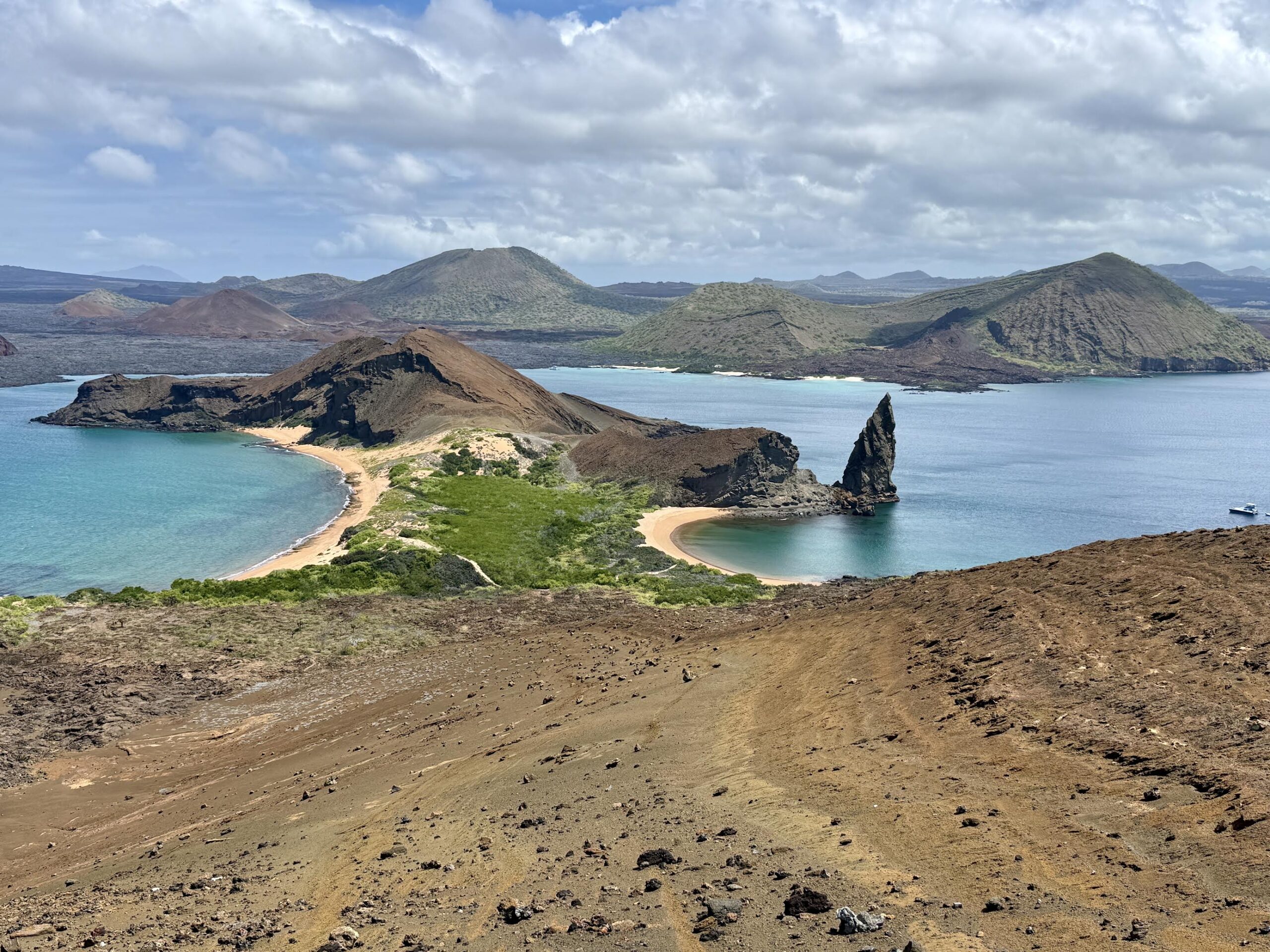
While not in the “cute shoe” department, I’m so glad I purchased these Teva Hydratrek Sandals. They are surprisingly comfortable and worked well for almost all of our trips. I did end up getting some gravel in my Tevas on the Bartolome hike, but I just brushed it out. It drove Lucy crazy, however. She would have preferred hiking shoes.
Other good options would be Omnium Water Shoe and the Tirra depending on your day trips.
Galápagos Day Tour & Snorkeling Essentials
Whether you are visiting Los Túneles, Kicker Rock, Tintoreras or Bartolomé, you will spend a significant amount of time on the water. These items belong in your day bag for every single excursion:
- Dry Bag: Essential to protect your camera, phone, wallet, and general belongings from heavy ocean spray and rain.
- Dry Phone Case / Waterproof Pouch: For taking photos on the boat with wet hands. I only used these on the days we did our own snorkeling.
- GoPro or Underwater Camera/Case: For incredible underwater wildlife photos. DJI is another highly rated brand
- Extra GoPro Batteries: Cold water drains camera batteries fast. Bring an extra
- Seasickness Medication: Even if you rarely experience motion sickness, the inter-island ferries and open ocean crossings can be incredibly rough. Take your medication before boarding.
- Lip Balm / Chapstick (with SPF): The salt water and wind will chap your lips instantly.
- Sun shirt with a hood: A hooded sun shirt is ideal for protecting your neck and ears on open-air boats. Note: You can buy these on the islands, but they are very expensive (though they do make a great souvenir!).
- Hat: Keep your face shaded with either a ball cap (and use the hood of your sun shirt to protect your neck or a wide brimmed hat.
- Change of clothes: To change into after snorkeling so you aren’t shivering on the boat ride back or hiking in wet clothes. You may snorkel before the dry part of the tour and likely won’t know in which order until you board.
- Reusable Water Bottle: When excursions say they include water, they don’t mean individual water bottles. It’s usually a 3 or 5 gal jug that you refill your own bottle.
- Towel: Verify ahead of time if your accommodation and tour provides towels. If not, make sure to pack a lightweight, quick-dry travel towel.
Don’t Forget a Wet Bag
One item that doesn’t get mentioned often is a waterproof wet bag. This is perfect for sealing away wet swimsuits, damp rash guards, and soggy water shoes so they don’t soak the rest of your gear on travel days. If you are a parent, reusable cloth diaper wet bags work perfectly for this!
Toiletries, Medication, and Travel Accessories
Most toiletries are available in the larger towns like Puerto Ayora, but selections are limited and prices are much higher. Pack these in your checked bag:
Toiletries
- Toothbrush & Toothpaste
- Deodorant
- Razor
- Shampoo & Conditioner
- Hairbrush
- Body wash
- Body lotion
- Face wash: I was especially glad to have a dedicated facial cleanser because heavy sunscreen gets reapplied constantly throughout the day and needs to be scrubbed off at night.
- Face moisturizer / lotion
- For Dry Hair: The combination of saltwater, intense sun, and wind can leave hair feeling like straw. I recommend bringing Argan oil, a leave-in conditioner, or a hair mask to save your hair.
Medications and First Aid
- Seasickness meds (Dramamine, Bonine, or Sea-Bands)
- Anti-diarrheal medication (Imodium) – Trust me!
- Ibuprofen / Acetaminophen
- Allergy medication and bug bite cream
- Cold Meds (Lucy ended up needing Sudafed a first few days we were there)
- Bandages and blister pads (Essential for long walking days on volcanic rock)
- Diamox: If staying in Quito before travel you may want to speak to your Dr about altitude sickness medication. The altitude is no joke especially for people that live at sea level.
Smart Travel Accessories
- Baggies (Ziploc bags): Bring several sizes. They are useful for wet clothing, snacks, or protecting electronics. I used them in my day tour backpack to keep my small medication case, chapstick, and cash together as well as another one with our sunscreen for easy access.
- Baggie of rice or Silica dry bags: In case the humidity causes your phone not to charge.
- Waterproof cover for backpacks/suitcases: Extremely helpful during wet boat rides, ferry crossings, or unexpected tropical downpours. My cloth luggage got wet in the back of the taxi from the sudden downpour driving into Puerto Ayora from the airport.
- Crossbody bag or anti-theft security purse: Perfect for keeping your cash, passport, phone, and cards secure while walking around town at night. I use an older version of this Sherpani bag.
- Bug wipes or spray: Essential for evening mosquito protection or hikes in the highlands.
- Compact shopping bag(s): Plastic bags are restricted on the islands; bring a packable reusable shopping bag for groceries or souvenirs.
- Portable power bank: Day tours last all day with zero opportunity to charge devices.
- Camera: I know many people just using their phones now but I’m so glad I invested in a new camera for this trip. I was able to capture some incredible shots and zoom to see penguins and other birds on the distant rocks.
- Inflatable life vest for kids if traveling with young children. While many tour operators will have these on the boats, you won’t usually find kid sizes on water taxi’s. Also, you may want something safe for your kiddos while swimming and snorkeling from the beach.
What I Wish I Would Have Brought
Even after careful planning, there were some things I regret not packing:
A Second Sun Shirt and Rash Guard: Because things take a long time to air-dry in the humid environment, putting on a damp, cold sun shirt the next morning is not fun. I wished I had a backup as I ended up wearing my sun shirt a lot. Pack two!
I also neglected to pack a rash guard because I thought I would be in a wet suit during the snorkel trips. I only needed a wet suit at Kicker Rock and would have preferred to have something to cover my back and arms in the water.
My Own Mask and Snorkel: While day-tour boats provide snorkeling equipment, the fit can be hit-or-miss. If your mask leaks, it can ruin a once-in-a-lifetime snorkel session with sea lions. Bringing a personal mask that fits your face perfectly is worth every inch of luggage space. PLUS there are opportunities to snorkel on your own especially in Isabela and San Cristobal. One of our best experiences was snorkeling just off the beach by the ferry in Isabela. Many places charge $25+ for rentals.
I purchased these dive socks to protect against blisters while snorkeling. We didn’t end up needing them but it’s something you may want to consider as there is enough of a barrier on the bottom to act as a shoe getting into the water.
What NOT to Pack for a Land-Based Trip
Save your luggage space and leave these items behind:
Fancy Clothes or Formal Wear: There is no dress code anywhere on the islands. Even the nicest restaurants in Puerto Ayora welcome diners in shorts and casual shirts.
Heavy Hiking Boots: They take up too much space and are too hot. Breathable trail runners are more than enough for the terrain.
Single-Use Plastics: The Galápagos has strict environmental laws. Single-use plastic water bottles, shopping bags, and straws are banned. Bring reusable options instead. We did see them in use but officially, you shouldn’t use them.
Expensive Jewelry: The islands are incredibly safe, but flashy jewelry is out of place and easily lost while snorkeling.
Galápagos Seasons: How it Changes Your Packing
The Galápagos has two distinct seasons, and depending on when you visit, you may need a couple of extra items in your checked bag:
The Warm & Wet Season (December to May)
The Weather: Hot, sunny, with occasional heavy tropical downpours. The ocean water is warm and calm. Pack extra lightweight sun shirts, an extra bathing suit, and make sure your waterproof backpack cover is easily accessible for sudden rain.
The Cool & Dry “Garúa” Season (June to November)
The Weather: Cooler air temperatures, overcast skies, choppy seas, and a constant misty haze in the highlands. The water temperature drops significantly due to the Humboldt Current. You will absolutely want a lightweight hoodie or fleece for the evenings. Because the water is cold, ensure your day-tour operator provides a wet suit for snorkeling.
Frequently Asked Questions About Packing for the Galápagos
What should I pack for the Galápagos Islands?
The most important items to pack for the Galápagos are reef-safe sunscreen, sunglasses, a hat, a rash guard or sun shirt, comfortable walking shoes, a reusable water bottle, motion sickness medication, a dry bag, and enough U.S. cash for dining out, tips and small purchases. Most travelers spend far more time outdoors than they expect, so sun protection should be your top priority.
How much cash should I bring to the Galápagos?
The amount depends on your travel style and how many tours are prepaid, but I recommend bringing at least a few hundred dollars in U.S. cash. Small bills ($20s, $10s, $5s, and $1s) are useful for water taxis, tips, small restaurants, souvenirs, and other daily expenses. While credit cards are accepted in some places, cash is still widely used throughout the islands. I brought $4,000 cash for 3 people and came home wit about $700. That included paying National Park Entry fees.
Do I need reef-safe sunscreen in the Galápagos?
Yes. Reef-safe sunscreen is highly recommended to help protect the fragile marine ecosystem while also protecting your skin from the intense equatorial sun. Even on cloudy days, UV levels can be extremely high in the Galápagos.
Do I need a wetsuit in the Galápagos?
Most travelers do not need to bring a wetsuit. Many tour operators provide wetsuits as part of snorkeling excursions, especially during cooler months. If you tend to get cold easily or plan to snorkel frequently, you may prefer to bring your own for comfort and fit.
Should I bring snorkeling gear?
Most day tours provide masks, snorkels, and fins. However, if you are particular about fit or plan to snorkel often, bringing your own mask can be worthwhile. A properly fitting mask can make a huge difference in your snorkeling experience. This was one of the items I wish we had packed.
Are water shoes necessary in the Galápagos?
Water shoes are not required, but I found them incredibly useful. They are helpful for wet landings, rocky shorelines, snorkeling tours, and walking on volcanic terrain. If you have room in your luggage, they are worth bringing.
What shoes should I bring to the Galápagos?
I recommend bringing three or four types of footwear:
* Comfortable walking shoes
* Hiking shoes or trail runners
* Sandals
* Water shoes
This combination covers everything from town exploration and volcanic hikes to beaches and snorkeling excursions.
What should I wear for snorkeling tours in the Galápagos?
For snorkeling tours, I recommend wearing a swimsuit, rash guard or sun shirt, swim shorts or leggings, a hat, sunglasses, and reef-safe sunscreen. Bringing a dry bag, reusable water bottle, towel, and change of clothes will make the day much more comfortable.
What should I pack in my day bag for Galápagos tours?
Your day bag should include:
* Reef-safe sunscreen
* Sunglasses
* Hat
* Reusable water bottle
* Camera and/or GoPro
* Extra batteries
* Dry bag
* Change of clothes
* Towel
* Lip balm
* Seasickness medication (take beforehand)
* Cash for tips and small purchases
Do I need motion sickness medication for the Galápagos?
If you plan to take inter-island ferries or boat tours, I strongly recommend bringing motion sickness medication. Even travelers who normally don’t get seasick can experience rough conditions, particularly on ferry crossings between islands.
Can I buy sunscreen and toiletries in the Galápagos?
Yes, but selections can be limited and prices are often higher than on the mainland. It’s much easier and usually less expensive to bring your preferred sunscreen, toiletries, medications, and personal care items from home.
What is the weather like in the Galápagos?
The Galápagos has warm temperatures year-round, but weather conditions can vary depending on the season and island. Days are often sunny and warm, while boat rides can be windy and evenings may feel cooler than expected. Lightweight layers are ideal.
Is laundry available in the Galápagos?
Yes. Laundry services are available on Santa Cruz, Isabela, and San Cristóbal Islands. Many travelers choose to pack lighter and use local laundry services during longer trips. Some companies even have What’sApp messaging available for pickup.
Can I drink the tap water in the Galápagos?
No. Visitors should not drink tap water in the Galápagos. Bring a reusable water bottle and refill it with filtered or bottled water provided by your hotel, tour operator, or restaurant.
How many swimsuits should I bring to the Galápagos?
I recommend bringing at least two swimsuits. Many travelers snorkel or swim multiple days in a row, and having a second suit allows one to dry while you wear the other.
The best land-based Galápagos packing list prioritizes sun protection, water activity prep, and ultimate comfort over fashion. By checking a bag, you give yourself the room to pack the right footwear, full-sized reef-safe sun protection, and the backup gear needed to enjoy every single island-hopping moment.
Pack smart, bring plenty of small bills, and get ready for an unforgettable adventure!
What other items are on your Galapagos packing list?
Leave a Reply